The Making

Our Craft

Thirty-seven hands touch every TRENFi brush before it reaches yours. Here is the journey.

A brush is not assembled. It is built.

Every TRENFi brush passes through four workshops in four countries before it earns our mark. There are no shortcuts in this process — each step exists because we tried removing it and the brush suffered. What remains is the minimum required for excellence.

01
Hand-sorting heritage boar bristle
Normandy, France

Bristle Selection

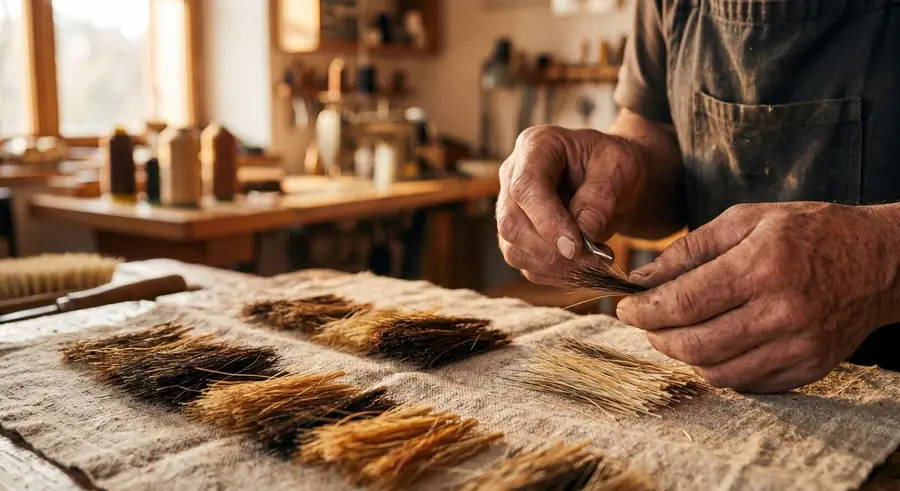
Our bristle comes from the Château de Brossier estate in Calvados, where the Lefebvre family has raised heritage Gascon boar since 1847. Each animal yields only 200 grams of first-cut bristle per year — the outermost layer, where the fibers are densest and most elastic.

After harvest, the bristle is washed in cold spring water and air-dried for three weeks. Then comes the sorting. Marie-Claire Lefebvre, 74, has graded bristle by touch for over fifty years. She separates each bundle into seven grades by stiffness, length, and taper. Only the top two grades — roughly 30% of the harvest — meet TRENFi's specification.
Grade: First-cut, top 30% Drying: 21 days, air-dried Sorting: By hand, 7 grades
02
Turning red oak handles on a lathe
Tuscany, Italy & Alentejo, Portugal

The Handle

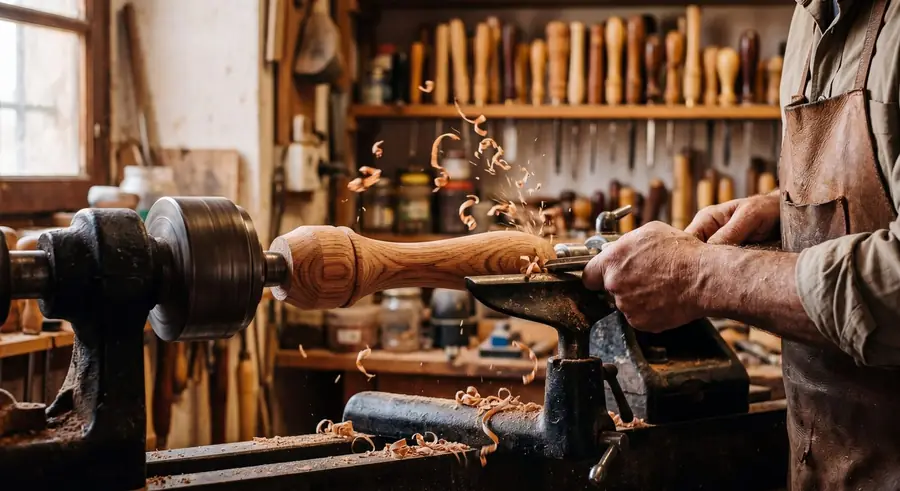
Two materials, two traditions. The A-Series handle is turned from solid Tuscan red oak, sourced from the Bosco di Sant'Antimo — a managed forest in the hills south of Siena where trees grow slowly in mineral-rich volcanic soil. The tight grain and deep amber color cannot be replicated in faster-growing timber.

Each handle is turned on a 1960s Italian lathe by a single craftsman who shapes, sands through five progressive grits (80, 120, 220, 400, 600), and finishes with natural beeswax from the same estate's apiaries. The wax seals the grain without coating it — the wood breathes, ages, and darkens naturally over years of use.

The S-Series uses Portuguese cork from century-old oaks in the Herdade da Comporta. Hand-stripped every nine years by tiradores, cork is naturally anti-slip, moisture-resistant, and 40% lighter than hardwood. Each handle develops a unique amber patina.
Oak sanding: 5 grits, hand-finished Finish: Natural beeswax Cork harvest: Every 9 years
03
Precision pin grinding in Solingen
Solingen, Germany

Pin Engineering

The M-Series uses ground-tip metal pins manufactured at the Klingenfabrik Weber workshop in Solingen — Germany's blade capital since the Middle Ages. Each pin is individually ground to a smooth, rounded 0.3mm tip on diamond-coated wheels.

The distinction matters: ball-tipped pins (used by most brands) are made by welding a plastic bead onto a wire. Ground-tip pins are shaped from a single piece of stainless steel. No weld point means no weak point. No plastic means no degradation from heat styling. The tip glides across the scalp without snagging, even at speed.

The same precision applies to our CNC-milled aluminum electronics housings — tolerances measured in hundredths of a millimeter.
Tip radius: 0.3mm, diamond-ground Material: Single-piece stainless steel Tolerance: ±0.02mm
04
Final brush assembly
Milan, Italy

Assembly & Setting

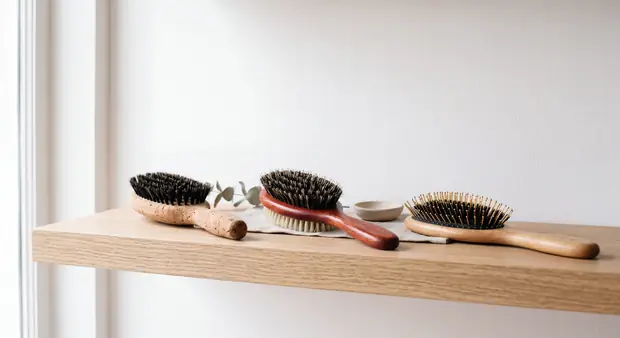
Every component converges in our Milan atelier for final assembly. The bristle is set by hand — each tuft placed with tweezers, angled to follow the curve of the barrel. A skilled setter places approximately 2,400 bristles per brush, working in natural light to judge density and uniformity by eye.

The barrel, the handle, the bristle: three elements that must feel like one. The transition between barrel and handle passes through a short wood neck collar — turned from the same timber as the handle — creating a seamless visual and tactile line from tip to grip.
Bristles per brush: ~2,400 Setting method: Hand-placed with tweezers Light: Natural daylight only
05
Quality inspection
Milan, Italy

Quality & Inspection

Before a brush earns the TRENFi mark, it passes through seven inspection points. Balance is tested on a fulcrum — the brush must rest level when placed on a single finger at the neck. Bristle density is measured with a gauge. The handle is checked for grain consistency, finish uniformity, and tactile smoothness.

Then comes the final test: a stylist uses the brush on three different hair types. If the tension isn't right, if the bristle catches, if the handle shifts in a wet grip — the brush is rejected. Our rejection rate averages 8%. Those brushes are disassembled, and the materials are returned to the beginning of the process.

Inspection points: 7 Rejection rate: ~8% Rejected materials: Recycled into process
Materials

Nothing Synthetic. Nothing Unnecessary.

Boar Bristle

Normandy, France

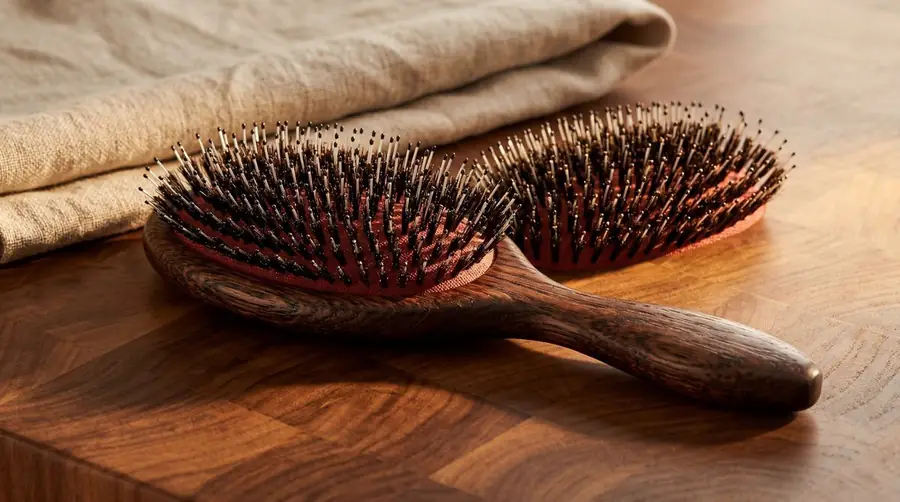
First-cut heritage Gascon boar bristle. The outer layer of the coat, where fibers are densest. Structurally similar to human hair — the scaled surface distributes sebum from root to tip, reducing oiliness at the scalp and adding shine to the ends.

Portuguese Cork

Alentejo, Portugal

Hand-stripped from 180-year-old cork oaks. Naturally anti-microbial, moisture-resistant, and 40% lighter than hardwood. The cellular structure provides natural grip even with wet hands or product buildup. Develops a warm amber patina unique to each brush.

Tuscan Red Oak

Val d'Orcia, Tuscany

Slow-grown in mineral-rich volcanic soil. The tight grain resists cracking and absorbs beeswax finish deeply. Ages like leather — the color deepens from honey to rich amber over years of daily use. Each handle is unique in grain pattern.

Solingen Steel

Solingen, Germany

Single-piece stainless steel pins, individually ground to 0.3mm rounded tips. No ball-tips, no welds, no plastic. Heat-resistant to 230°C for professional blow-dry use. The same metallurgical tradition that produces the world's finest surgical instruments.

“We remove until there's nothing left to remove. A TRENFi brush uses no more than four materials. If a fifth would make it better, we haven't found it in three years of looking.” — Matteo Lindström, Founder

Frequently Asked Questions

Is boar bristle harvesting cruelty-free?

Yes. Boar bristle is collected during routine grooming and shearing — similar to sheep wool harvesting. The animals are not harmed in the process. Our bristle comes from heritage farms in Normandy where boar have been raised for brush-making since the 1800s, following traditional and humane practices.

How long does it take to make one TRENFi brush?

From raw material to finished product, the process takes approximately 48 hours of combined work across multiple stages. The handle alone requires lathe-turning, five rounds of hand-sanding, and beeswax finishing. Bristle setting is done entirely by hand, one tuft at a time.

Why does TRENFi use cork for brush handles?

Portuguese cork is naturally anti-slip, moisture-resistant, and 40% lighter than hardwood. It's harvested from century-old cork oaks every nine years without harming the tree, making it one of the most sustainable grip materials available. Cork also develops a beautiful patina over time, making each brush unique.

Experience the Craft

Three series, four countries, one standard. Find the brush that European craft traditions have been building toward.